



Why a Catholic education?
All across America this past week, thousands of families have been visiting Catholic schools. Parents are registering their children for the next school year and reaffirming their commitment to Catholic education. Their children will be among the more than 2 million students attending Catholic schools in the United States.
Catholic schools improve our entire nation by producing students committed to highly productive, service-oriented lives. Our schools welcome and educate students of various races, nationalities and religions. Research shows that Catholic school graduates earn higher household incomes and perform more community service.
At a time when the automobile industry and banks are seeking billions in federal bailouts, the National Catholic Educational Association (NCEA) estimates that Catholic schools provide $19.8 billion in annual savings for the nation’s taxpayers.
Ultimately, excellent academic results are one of the true returns on an investment in Catholic education. Catholic school students score well above the national average on tests of reading, math, science and social studies, as well as on the SAT’s. Among Catholic high school students, NCEA reports that 99 percent graduate in four years and 97 percent go on to college.
Catholic education is in a new and transformational period.
Dedicated priests and religious sisters and brothers established and staffed Catholic schools beginning in the 19th century and continuing through much of the 20th century. For much of their history Catholic schools were free for families. Today Catholic schools depend on a work force made up of 96 percent lay and 4 percent religious faculty and staff.
Demographic shifts and huge changes in staffing and cost structures have had an impact on student enrollment nationwide which has dropped from roughly 4 million to 2 million students since the early 1960s. Closer to home, the enrollment has declined from 150,000 in the 1960’s to 45,000 in 2009. A related change is that the concentration of Catholics moved from Greater Boston’s urban centers to the suburbs, leaving our cities with two-thirds of our Catholic schools, but only one third of our Catholic population.
Catholic education’s traditional parish model is also changing. Parish schools increasingly reach beyond the boundaries of a particular parish or town and draw students from much wider geographic regions. The pastor continues in a central leadership role in most schools while other Catholic schools are reorganizing from parish-based models to multi-parish or regional models.
The Archdiocese of Boston is one of the largest Catholic school systems in the nation. Cardinal Seán O’Malley is committed to strengthening Catholic education. Business and civic leaders have stepped up with expertise, energy and resources. Partnerships with Catholic colleges provide professional development and other academic support.
We are experiencing success through the 2010 Initiative, launched in August 2005, in Boston, Brockton and Gloucester. The newly formed Campaign for Catholic Schools will carry on the mission of the 2010 Initiative as we seek to transform our schools to meet the needs of future generations.
The need for financial support for our schools and students is great. The true cost of education is higher than our tuition, which is kept more affordable thanks to direct contributions from parishes, donors, board members and through the generous support of The Catholic Schools Foundation and its Inner City Scholarship Fund, which provides over $6 million per year in scholarships to needy students and their families. We are reminded of the religious orders that started our schools with the philosophy that, “We don’t educate poor children because they are Catholic. We educate them because we are Catholic.”
For the future, we reaffirm all that makes Catholic education vital to our nation and its metropolitan regions: rigorous curriculum, talented teachers, faith formation, actively engaged parents, students who are motivated to learn, and a climate of respect and personal responsibility. We stress the high moral values important to the Church and the wider community.
St. Thomas Aquinas, the Patron Saint of Catholic Education said, “Wonder is the desire for knowledge.” Students in classrooms across the Archdiocese consistently demonstrate the breathtaking wonder they experience in learning. With this as our inspiration, we keep alive our commitment to provide for our students the moral pathway of academic excellence on their road to a lifetime of success.
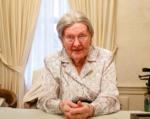
Mary Grassa O’Neill is Secretary of Education and Superintendent of Schools of the Archdiocese of Boston.