America's oldest Catholic newspaper
Official newspaper of the Archdiocese of Boston
Notre Dame professor presents logical case against assisted suicide
| More
Text size


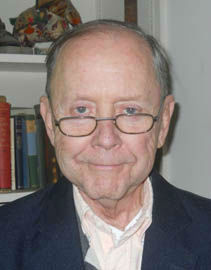
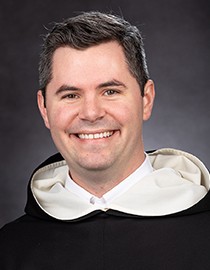
O. Carter Snead Notre Dame Univ. photo
Posted: 10/26/2012

But, he said, the argument for autonomy fails under its own logic, as soon as proponents attempt to define who should and should not be allowed to end their own lives. By definition, legalized physician assisted suicide requires the involvement the government and medical professionals.

"The only way to limit who kills him or herself or how people kill themselves is with an appeal to a paternalistic argument, which is the opposite of autonomy," he said.

The absence of logic in that argument and failure to protect individuals, he said, manifested itself in the Netherlands once distinctions had to be made regarding who could receive life ending treatments. Non-voluntary and involuntary euthanasia resulted.

"In the Netherlands you see this already. Once assisted suicide was legalized, in the name of autonomy and compassion, there was no meaningful way to argue politically for limits on it," he said.

He said arguments in favor of the removal of moral and religious principles from law and the legal process constitute a failure in understanding the nature of law, and pointed to other laws meant to protect human life.

"That is an argument that I think fails to understand, at bottom, what law is. Law is in many respects the imposition, the coercive imposition, of a particular view of the good. That view is arrived at through the political process, but every single law that is on the books, including things like speed limits, are the consequence of long discussion about normative principals. Speed limits are the result of a debate about the value of human life," he said.

He detailed logical arguments against physician assisted suicide based on principles such as the idea of law as directed toward the common good or healthcare providers as stewards in good faith to treat and heal patients.

"Imagine going to a doctor, and thinking, my doctor is not simply here to try to preserve my life or health to the best of his or her ability. My doctor might make a judgment at some point that the best thing for me to do is to kill myself," he said.

He also considered the possible consequences of passage of a law that allows physicians to help patients end their own lives, under the specific points made in the Massachusetts ballot initiative.

He pointed out the absence of oversight mechanisms in the law and the potential for abuse could hurt minorities, the disabled and other marginalized groups.

"In the Massachusetts there is no mechanism for enforcement, investigation, authority, oversight, or data verification. There is nothing like that," he said.

If you found this article interesting please consider helping us continue to spread the Good News.