Norfolk inmates seek Christ in Lay Dominican chapter
| More
Text size


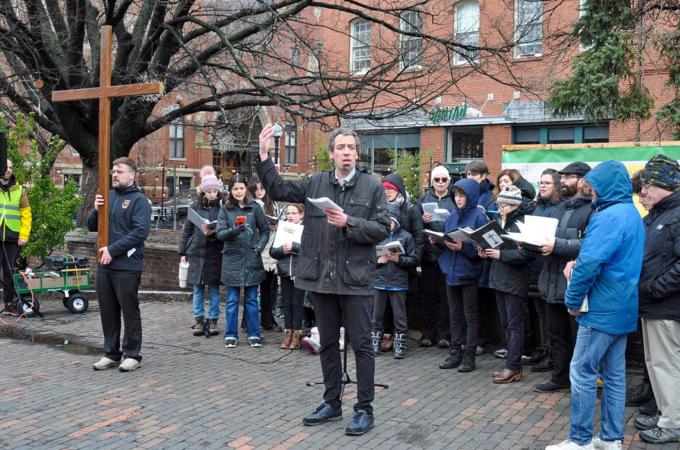
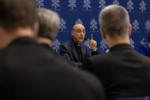
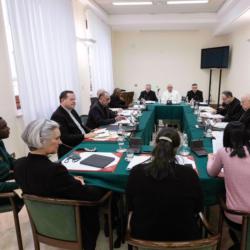
Ruth Raichle and Sister Kathleen Denevan OSF open a meeting of the Lay Fraternities of St. Dominic in Norfolk State Prison Feb. 4. Pilot photo/Christine Williams
Posted: 2/9/2007

Currently at Norfolk, there is a Mass in Spanish on Sundays, a Mass in English on Mondays and two communion services each week on Friday and Sunday nights. Once a month there is an Asian Mass, usually in Vietnamese. The lay Dominican chapter has a special Mass each month.

Raichle stresses that the lay Dominican order is a life-long commitment that not all are called to.

“This is really not for everybody. It’s a vocation,” she said.

For those who are involved, there is a strong sense that the invitation they received from Raichle or fellow inmates was a calling from God.

Three of the professed members of the order -- Nghia, Jesus and Philip -- spoke with The Pilot at Norfolk on Feb. 4. The inmates were only permitted to identify themselves by their first names.

All three said their involvement with the order deepens their relationship with God and with one another. That deepened relationship with God helps them to understand His forgiveness, and they see opportunities to do good going forward, they said.

“In the community I feel accepted and forgiven,” said Nghia. “It helped me to know who I am.”

“It’s a life-long commitment to God, and I believe it’s my way of giving back,” added Jesus.

Jesus recalled his ninth birthday, the day his mother gave him a statue of St. Martin de Porres, a Dominican. At the time he knew little of the saint and was more interested in his matchbox cars, but the gift has new meaning for him now.

“I’m sure there were many times God was calling, but I wasn’t listening,” he said of his life before becoming involved in the Dominican order.

Philip said that the idea of a personal relationship with God was foreign to him before he joined the order. He compares himself to the paralytic in the Gospel of Mark.

“I was paralyzed from my past, the choices I made. I was paralyzed from the shame and remorse,” he said.

Philip said he did not see hope for the future, especially after he was incarcerated. Now he believes his purpose is to spend the rest of his life helping others, he said.

“It changed the way I look at the way I live,” he said. “It’s helped me to become a better person.”


If you found this article interesting please consider helping us continue to spread the Good News.