

Culture
If (the governor) decides that Massachusetts will not opt into this program, then Massachusetts taxpayers will still have the opportunity to redirect their federal tax liability to a Scholarship Granting Organization, but not one in Massachusetts, not one that will benefit Massachusetts students.
Eileen
McLaughlin
McLaughlin
Last week, either here in The Pilot or in an insert in your parish bulletin, you might have read an article written by my colleague, Mary Goslin, about the Federal Scholarship Tax Credit. As career educators, it is unusual for us to spend as much time discussing tax programs as we have in the past year or so. However, this opportunity demands our attention and requires some education in order to understand what it is and, possibly, what it is not.
The Federal Scholarship Tax Credit is a unique opportunity offered by the federal government that would allow individual taxpayers to redirect their tax liability to a Scholarship Granting Organization (SGO). Historically, if a taxpayer owes the federal government money, he or she writes the check directly to the federal government. The government then directs that funding to any number of places. This new federal tax program would allow an individual to direct up to $1,700 of his or her tax liability to an SGO selected by the taxpayer.
Taxpayers are accustomed to hearing about the benefits of charitable donations or philanthropic giving as deductions. The Federal Scholarship Tax Credit is not a deduction. A tax credit directly reduces the amount of federal income tax a taxpayer owes when the taxpayer makes a cash contribution to an approved SGO and then claims that non-refundable tax credit. This new program allows an individual to direct where that tax payment goes.
Another unusual element of this new tax program is that the governor of each state must opt into this program in order for state-level Scholarship Granting Organizations to benefit from these tax credits. Gov. Healey must decide by Dec. 31, 2026, if Massachusetts will participate. As of today, 27 governors have declared that their states will opt into this program; another four governors have indicated that they are strongly considering opting in.
The bishops of the Massachusetts Catholic Conference have spent months learning about the Federal Scholarship Tax Credit and offer their support of this opportunity. The bishops understand that this opportunity has the potential to benefit all students in the state of Massachusetts; both public school districts and private schools are eligible to benefit from Scholarship Granting Organizations that would serve the needs of their students.
Readers of The Pilot likely know the name Michael Reardon, a regular contributor to this publication and the executive director of the Catholic Schools Foundation (CSF). Nearly 40 years ago, CSF was established to help raise funds for scholarships and programs that allow students from low-income backgrounds to benefit from high-quality Catholic education in the Archdiocese of Boston. Massachusetts participation in the Federal Scholarship Tax Credit would allow the Catholic Schools Foundation, a well-established partner to Archdiocesan Catholic Schools, the opportunity to expand its reach to support not only students from low-income households but also students whose household income is up to 300 percent of Massachusetts median gross income.
We understand that many families struggle and sacrifice to allow for their children to benefit from a Catholic school education. Massachusetts participation in this Federal Scholarship Tax Credit would allow for more families to be supported by the funds allocated from individuals redirecting up to $1,700 of his or her tax liability to an organization like the Catholic Schools Foundation.
Gov. Healey must decide by Dec. 31, 2026, whether or not Massachusetts will participate. If she decides that Massachusetts will not opt into this program, then Massachusetts taxpayers will still have the opportunity to redirect their federal tax liability to a Scholarship Granting Organization, but not one in Massachusetts, not one that will benefit Massachusetts students. At a time when budgets have been restricted, this Federal Scholarship Tax Credit would allow for a unique funding opportunity that could benefit all Massachusetts students.
The Massachusetts Catholic Conference urges Gov. Healey to opt into the Federal Scholarship Tax Credit Program. Please support them by communicating your support of this program directly to the governor by calling 617-725-4005.
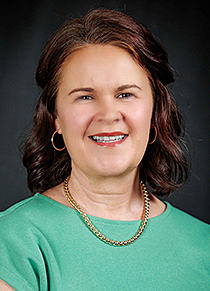
- Eileen McLaughlin is superintendent of Catholic Schools of the Archdiocese of Boston.
Help us expand our reach! Please share this article on social media

Recent articles in the Culture & Events section
-

Quo vadis, Ecclesia?Michael R. Heinlein
-

A wedding garment of mercyDeacon Greg Kandra
-

Migration stories: Father Andre-Marie GarinSavannah Miller
-

What is the power of a Catholic Schools Foundation scholarship?Michael Reardon
-

Migration stories: Father Mariano Milanese, OSARebecca Maitland


