

Faith
If you are new to an ordo, you might think it's a code book from the CIA, FBI, or IRS. However, unlike those federal agencies, this book provides you with a deciphering code at the beginning.
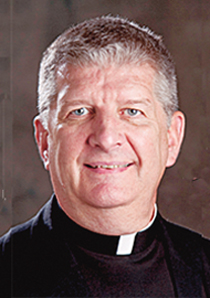
Father Robert M.
O'Grady
By now you may be asking, "How do I figure this out? How do I know which prayers at Mass or Liturgy of the Hours for which days?"
The Church provides us with not only various liturgical calendars but also with various ordos. On my office desk, I have a few of them -- one from the Holy See, one from Canada, one each for the Dominicans, the Franciscans, and the Jesuits; and most importantly, for a Bostonian, one for the four dioceses of Massachusetts. This last one is frequently called the Paulist ordo because it is published by the Paulist Press. This Massachusetts ordo also has the necrology of the bishops, priests, and deacons of the four dioceses of the Commonwealth. The 2027 edition is 300 pages and has been enlarged to 5x7 with a larger font size. It also comes in an electronic version.
Most sacristies will have a hard copy readily available for anyone concerned with the liturgy. Sometimes each priest, deacon, and each leader of various liturgical ministries will have a copy, especially sacristans and music ministries.
A lot of liturgical information is packed into those 150 pages. The 150 right-hand pages cover the Sunday and daily liturgies, while the 150 left-hand pages list the clergy necrology, sorted by the anniversary of death for each entry from the four dioceses.
If you are new to an ordo, you might think it's a code book from the CIA, FBI, or IRS. However, unlike those federal agencies, this book provides you with a deciphering code at the beginning. Introductory material is always important in Roman Catholic liturgical books; an ordo is no exception.
Rather than repeat the introductory material, let's look at a random entry.
The Fourth Sunday of Easter, this coming year is on April 18, 2027. It's on page 121 of the 2027 Paulist Ordo #7, the version for Massachusetts.
You won't be surprised that there are abbreviations. Newcomers will have to refer to the introductory material, but once you get them down, the ordo is much easier to use.
You will find that Sundays (and some other solemnities and feasts) are in UPPER CASE effect. The ordo uses a base font, then as needed a style (e.g. bold, italic), then a font size, and then an effect. In this book, italics are always used to indicate options.
Under the date and day is "NOTE," followed by abbreviations for a required or an optional color, this one is "Wh" for white.
Next is HOURS and in bold Pss IV. This is for the Liturgy of the Hours, and it tells the user which week in that liturgical text to begin. Beginning in January and through June, in this column, we'll be covering the Liturgy of the Hours as we did the Mass in prior columns. We'll get back to this in the course of those columns.
The next two are about the Mass.
MASS gives some directions. This one has Prop meaning that, in the Roman Missal, you will find the Mass prayers that must be used on this day. The Gl and Cr tell us that both the Gloria and the Creed are to be sung or said during all the Masses on this day. Next, Easter Pf I-V: a preface that begins the Eucharistic Prayer (only I, II, or III) for the Easter season is to be prayed, but any of the five for Easter may be chosen. Lastly, in italics (= optional), Sol Bl 6 -- the Easter solemn blessing at the end of Mass may be used.
RDGS indicates the readings for the day. The first number, for this day it's 50, tells us about the number; that's the set of readings, not the page number, in the Sunday Lectionary, where the readings for this day are located. This is followed by the citations -- chapter and verses -- for each of the readings for this day -- first reading, Acts of the Apostles; Responsorial Psalm; second reading, I John; and Gospel, John. From previous columns, you will recall that, for the most part during the Easter season, both on Sundays and weekdays, preference is given to the Gospel of John for Gospel readings.
Though not actually part of the ordo, there follows in this edition a brief summary of the four scriptural texts. These are provided as springboards for homilists.
Some days, as does this one, have PN or Pastoral Note. The Fourth Sunday of Easter is called Good Shepherd Sunday because, in all three years, a section of John's Gospel about Christ the Good Shepherd is proclaimed.
This PN states, "Today has been designated as 'World Day of Prayer for Vocations.' Prayers for vocations to the presbyterate, diaconate, and consecrated life should be inserted into the General Intercessions (Universal Prayer) at Mass."
Some days are more complicated, but once you have the basics down, you'll see that an ordo is indispensable for our praying with and in the Church.
Help us expand our reach! Please share this article on social media

Recent articles in the Faith & Family section
-

Singing to the LordFather Robert M. O'Grady
-

SuperstitionArchbishop Richard G. Henning
-

Lessons Learned from the Missions -- Part IMaureen Crowley Heil
-

Settling accountsScott Hahn
-

Talents and crossesFather Joshua J. Whitfield


